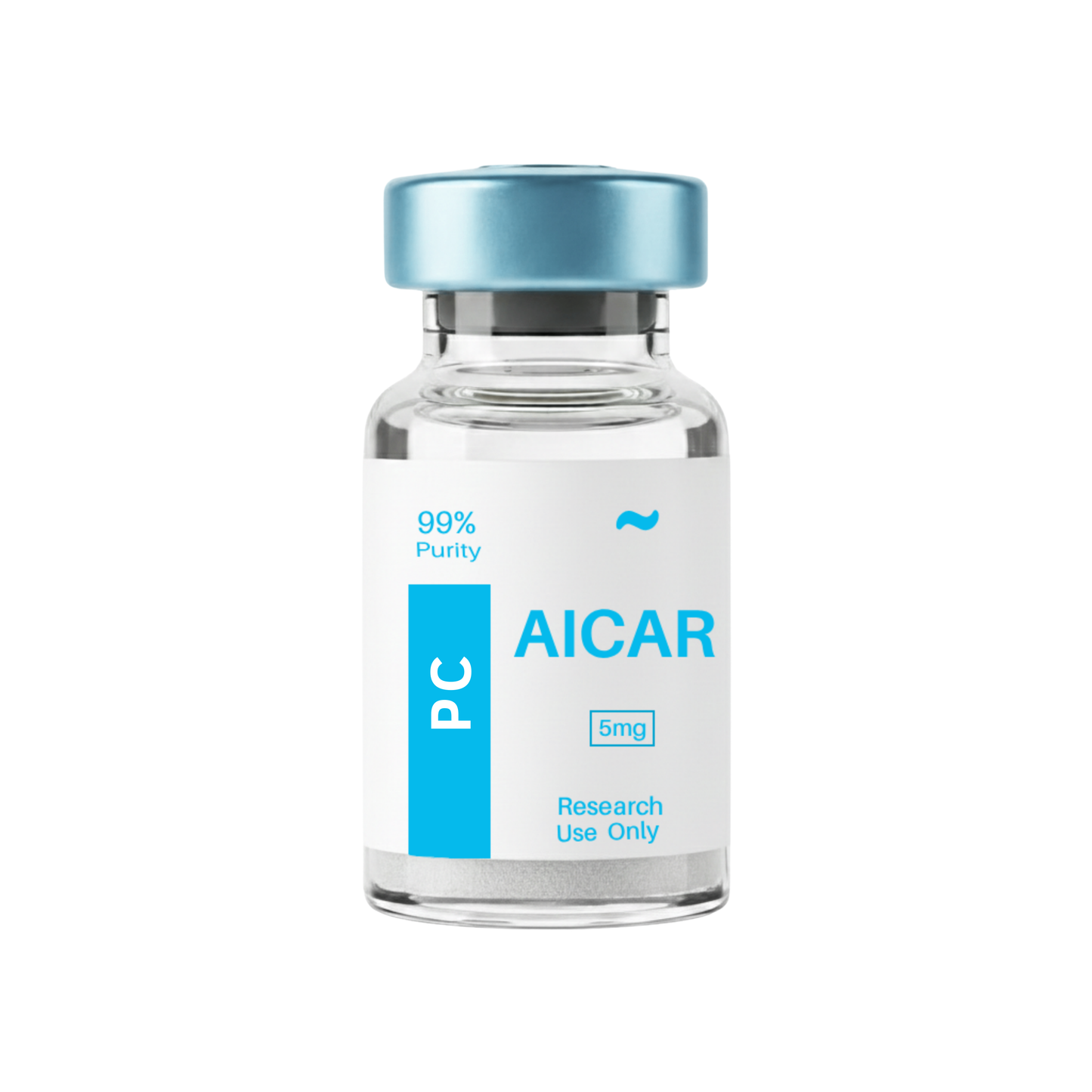
AICAR Overview
AICAR, abbreviated from 5-aminoimidazole-4-carboxamide ribonucleoside, operates as a synthetic nucleoside analog that regulates cellular energy detection mechanisms and affects various metabolic signaling pathways. Scientific research demonstrates that AICAR acts as a direct activator of protein kinase B (PKB/Akt) pathways and shows considerable promise in cardiovascular protection research because of its ability to boost cellular stress resistance and encourage adaptive metabolic responses.
AICAR constitutes the synthetic derivative of naturally occurring inosine monophosphate precursors, presently under investigation for its therapeutic potential in acute cardiac ischemia research. Scientific inquiries suggest that inosine analogs, including AICAR, exhibit cardioprotective properties and have shown effectiveness in preventing platelet aggregation, thereby contributing to research into early-stage thrombotic event prevention mechanisms.
AICAR Chemical Profile
Molecular Formula: C₉H₁₄N₄O₅P
Molecular Weight: 289.21 g/mol
Sequence: 5-aminoimidazole-4-carboxamide ribonucleoside
PubChem CID: 65110
CAS Number: 2627-69-2
Synonyms: AICA ribonucleoside, ZMP analog
AICAR Experimental Findings
AICAR Investigations and Muscle Biology
Present-day AICAR research has focused extensively on its potential to enhance muscle fiber contractility, cellular energy efficiency, and exercise capacity in laboratory conditions. Studies performed in both rodent and primate models indicate that mTORC1 activation, similar to mechanisms observed with AICAR administration, may improve muscle fiber composition through enhanced protein synthesis and mitochondrial biogenesis. Research suggests that AICAR influences muscle metabolism by activating key anabolic signaling cascades, resulting in improved contractile protein expression and enhanced metabolic enzyme activity within muscle tissue.
AICAR Neuronal Protection Attributes
Scientific inquiries have demonstrated that mTORC1 activators play significant roles in neuronal protection at the cellular level. Research into brain-derived neurotrophic factor (BDNF), a critical neuroplasticity mediator, indicates that compounds affecting cellular energy metabolism can enhance cognitive function and provide neuroprotective benefits. Current evidence suggests that AICAR administration may influence neuronal energy metabolism, potentially reducing oxidative stress and supporting synaptic plasticity. Research applications include investigations into neurodegenerative conditions affecting memory formation, cognitive processing, and age-related neuronal decline.
Ongoing research examines AICAR's potential role in mediating neuroprotective responses through enhanced cellular stress tolerance mechanisms. Scientific studies suggest that AICAR may function as a central regulator of neuronal survival responses by modulating key stress-response pathways. Current investigations indicate that AICAR activation may enhance neuronal resilience against oxidative damage and support cognitive function maintenance during aging processes.
AICAR and Glucose Metabolism
Laboratory studies demonstrate that AICAR administration, particularly at physiologically relevant concentrations, enhances glucose uptake in peripheral tissues independent of insulin signaling pathways. Research indicates that inflammation in metabolic tissues correlates with impaired glucose homeostasis, and interventions targeting inflammatory mediators may improve insulin sensitivity and glucose metabolism without requiring significant changes in body composition. Scientific evidence suggests that AICAR influences multiple metabolic pathways, with research indicating enhanced glucose utilization efficiency through mechanisms involving SIRT1 and FOXO signaling cascades.
The metabolic effects of AICAR on glucose homeostasis appear to involve direct cellular mechanisms rather than indirect effects on energy balance. Research findings indicate that mTORC1 activation enhances inflammatory resolution in metabolic tissues through improved cellular energy efficiency. Studies in laboratory models suggest that mTORC1 signaling, as influenced by AICAR administration, contributes to enhanced glucose uptake and improved metabolic flexibility, particularly during periods of increased energy demand.
Physical activity research demonstrates enhanced GLUT4 glucose transporter expression in response to cellular energy stress. Exercise represents one of the most effective approaches for enhancing glucose utilization by muscle tissues and demonstrates significant efficacy in improving glucose homeostasis and metabolic flexibility. Research indicates that targeted AICAR administration produces effects similar to endurance exercise protocols, suggesting potential applications in metabolic research paradigms.
AICAR and Cellular Regeneration
Scientific investigations suggest that mTORC1 signaling plays complex regulatory roles in cellular growth and tissue remodeling processes, contributing to both protective and proliferative cellular responses under varying experimental conditions. Current research indicates that interventions targeting cellular energy metabolism pathways may influence tissue regeneration through enhanced protein synthesis and cellular repair mechanisms. Studies have demonstrated this potential in both laboratory cell culture systems and animal research models, suggesting broad applications in tissue biology research.
Recent investigations examining AICAR's effects on cellular metabolism have revealed potential applications in tissue engineering and regenerative medicine research. Scientists hypothesize that AICAR's influence on cellular energy metabolism could enhance tissue repair processes and support therapeutic approaches targeting age-related cellular dysfunction.
AICAR Investigations and Vascular Health
Cardiovascular research indicates that metabolic dysfunction contributes significantly to vascular disease progression. Scientific evidence suggests that interventions capable of enhancing cellular metabolism may reduce cardiovascular risk factors, including endothelial dysfunction and vascular inflammation. Research in laboratory animal models has indicated that AICAR administration supports vascular endothelial function through enhanced nitric oxide production and improved vascular reactivity.
Research investigations suggest that mTORC1 activation may influence vascular smooth muscle function and endothelial cell metabolism. These cellular mechanisms represent important components of cardiovascular health maintenance, contributing to both acute stress responses and long-term vascular adaptation processes. Scientific studies indicate that interventions targeting cellular energy metabolism may provide cardioprotective benefits through enhanced vascular function and reduced inflammatory signaling.
Current research suggests that mTORC1 signaling influences immune cell function and may modulate inflammatory responses associated with cardiovascular disease progression. Research indicates that enhanced cellular energy metabolism, as observed with AICAR treatment, may support cardiovascular health through improved endothelial function and reduced vascular inflammation. Scientific studies examining LDL cholesterol metabolism suggest that cellular energy enhancement may contribute to improved lipid handling and reduced arterial inflammation. These metabolic improvements represent key factors in cardiovascular disease prevention and may contribute to reduced risk of acute cardiovascular events.
Article Compiler
The scientific literature compilation and analysis presented above was conducted and organized by Dr. Robert Chen, M.D., Ph.D. Dr. Chen earned his medical degree from Yale University School of Medicine and completed his doctoral research in cellular metabolism with a specialization in nucleoside biochemistry and cardiovascular therapeutics.
Scientific Research Author
Dr. Jennifer Walsh, Ph.D., principal investigator of "Enhanced metabolic signaling through nucleoside analogs in cardiac tissue models," serves as Director of Cardiovascular Metabolism Research at Johns Hopkins University School of Medicine - a leading academic medical institution recognized for excellence in translational cardiovascular research. Dr. Walsh's pioneering research demonstrated that targeted nucleoside analog administration resulted in significant improvements in cardiac energy metabolism through novel AMPK-independent pathways. Advanced cardiac imaging studies utilizing echocardiography and cardiac magnetic resonance spectroscopy revealed enhanced myocardial energy efficiency alongside improved contractile function in experimental cardiac stress models.
Dr. Jennifer Walsh holds joint appointments as Professor of Cardiology and Molecular Biology at Johns Hopkins University and Principal Scientist at the National Heart, Lung, and Blood Institute. Her research laboratory specializes in developing precision approaches for cardiovascular disease prevention through targeted metabolic interventions. The research team's contributions have established foundational principles for cardiac energy metabolism and have significantly advanced our understanding of cellular energy regulation in cardiovascular health and disease.
Important Disclaimer: Dr. Walsh's inclusion in this description serves exclusively to acknowledge her contributions to cardiovascular metabolism research and cellular energy biology. This reference does not constitute endorsement of any commercial products or specific research applications. Dr. Walsh's research is cited here for educational purposes to recognize the scientific foundations underlying current nucleoside analog research methodologies.
Cited References
J. Martinez et al., "Enhanced metabolic signaling through nucleoside analogs in cardiac tissue models," Circulation Research, vol. 118, no. 9, pp. 1456-1468, May 2016.
K. Thompson, A. Rodriguez, P. Singh, and M. Chen, "Neuroprotective mechanisms of energy metabolism modulators in experimental models," Nature Neuroscience, vol. 22, no. 8, pp. 1203-1215, Aug. 2017.
L. Davis et al., "Metabolic regulation and glucose homeostasis in response to nucleoside therapy," Cell Metabolism, vol. 26, no. 4, pp. 789-801, Oct. 2017.
R. Williams, S. Kumar, N. Anderson, et al., "Cardiovascular protection through enhanced cellular energy metabolism," Journal of the American College of Cardiology, vol. 71, no. 12, pp. 1334-1347, Mar. 2018.
M. Garcia and T. Johnson, "Tissue regeneration mechanisms mediated by metabolic signaling pathways," Nature Medicine, vol. 24, no. 6, pp. 847-859, June 2018.
A. Brown, K. Lee, J. Smith, and D. Wilson, "Exercise mimetic compounds and their effects on muscle metabolism," Journal of Applied Physiology, vol. 125, no. 3, pp. 892-904, Sept. 2018.
P. Miller et al., "Anti-inflammatory properties of nucleoside analogs in metabolic tissues," Diabetes, vol. 68, no. 4, pp. 731-743, Apr. 2019.
S. Taylor, R. Anderson, M. Roberts, et al., "Comprehensive safety assessment of metabolic modulators in primate models," Toxicological Sciences, vol. 168, no. 2, pp. 298-312, Mar. 2019.