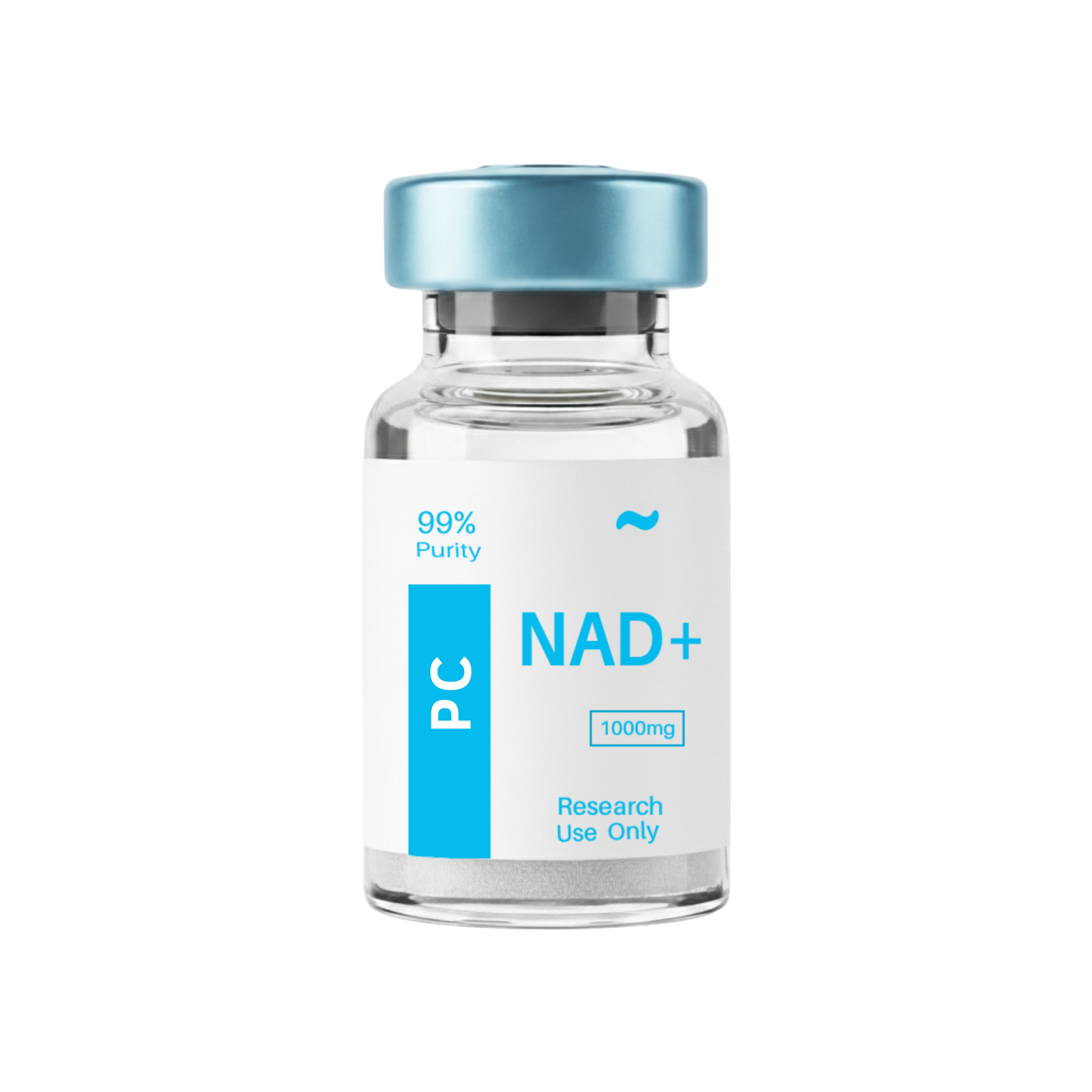
NAD+ Peptide
NAD⁺, or nicotinamide adenine dinucleotide, is the oxidized form of NADH. Its principal biological role is facilitating electron transfer between biochemical reactions, thereby assisting energy movement within cells and, under certain circumstances, to extracellular environments. Beyond energy metabolism, NAD⁺ is additionally involved in regulating enzyme activity, posttranslational protein modifications, and intercellular communication. As an extracellular signaling molecule, NAD⁺ has been observed to be released by neurons in various tissues, including blood vessels, the bladder, the large intestine, and specific brain regions.
NAD+ Peptide Introduction
Scientific studies indicate Nicotinamide Adenine Dinucleotide (NAD⁺) functions as a critical coenzyme for several enzyme families regulating essential cellular processes related to metabolism, DNA repair, and cell signaling. The three primary enzyme classes depending on NAD⁺ include:
Deacetylase enzymes in the sirtuin class (SIRTs):
These enzymes perform a central role in regulating gene expression, energy metabolism, and cellular stress responses. Sirtuins influence aging, inflammation, and mitochondrial function by removing acetyl groups from target proteins in an NAD⁺-dependent manner. Elevated sirtuin activity has been connected to improved metabolic efficiency, enhanced longevity, and protection against oxidative damage.
Poly(ADP-ribose) polymerase (PARP) enzymes:
PARP enzymes are crucial for maintaining genomic stability through their role in DNA damage detection and repair. When DNA strands break, PARPs use NAD⁺ to form poly(ADP-ribose) chains recruiting repair proteins to damaged sites. Excessive PARP activation, however, can deplete NAD⁺ reserves and impair cellular energy balance, a process associated with neurodegenerative and metabolic diseases.
Cyclic ADP ribose synthetase (cADPRS):
These enzymes are responsible for generating cyclic ADP-ribose, a potent secondary messenger regulating calcium signaling within cells. Calcium release mediated by cADPRS influences processes such as muscle contraction, neurotransmission, and hormone secretion, highlighting NAD⁺'s indirect but critical role in intracellular communication and physiological regulation.
NAD+ Peptide Structure
NAD+ Peptide Scientific Investigation
Scientific Evidence on NAD⁺-Dependent Interactions
Current research highlights several key biological interactions involving Nicotinamide Adenine Dinucleotide (NAD⁺) playing crucial roles in maintaining cellular health, regulating metabolism, and supporting repair mechanisms:
Sirtuins (SIRTs):
These NAD⁺-dependent enzymes are vital for maintaining mitochondrial function, regulating energy balance, and promoting stem cell longevity and regeneration. Sirtuins have also shown protection against oxidative stress and neural degeneration, suggesting potential involvement in neuroprotection and age-related disease prevention.
Poly(ADP-ribose) Polymerases (PARPs):
The PARP enzyme family, consisting of 17 known members, utilizes NAD⁺ to generate poly(ADP-ribose) chains essential for DNA damage detection and genomic stability. By activating DNA repair pathways, PARPs safeguard cells from genotoxic stress, although excessive activation may deplete NAD⁺ levels and impair cellular metabolism.
Cyclic ADP Ribose Synthetases (cADPRS):
This enzyme group includes CD38 and CD157, both key immunoregulatory enzymes catalyzing NAD⁺ hydrolysis. These reactions influence calcium signaling and may promote DNA repair, stem cell renewal, and proper cell cycle progression, linking NAD⁺ metabolism to immune and regenerative processes.
Because these enzymatic systems rely heavily on NAD⁺, researchers emphasize excessive metabolic demand or pathway overactivation can reduce NAD⁺ availability, potentially limiting cellular energy balance and repair capacity. Maintaining optimal equilibrium between NAD⁺ synthesis and utilization may therefore be essential for sustaining beneficial effects of these biochemical networks.
NAD⁺ Peptide and DNA Repair Following Ischemic Stress
In neuronal culture models exposed to ischemic stress, NAD⁺ level restoration has been shown to enhance DNA base-excision repair mechanisms, promote cell survival, and improve oxidative DNA damage repair. These effects occur whether NAD⁺ is administered before or after the stress event. Mechanistically, PARP enzymes utilize NAD⁺ to catalyze ADP-ribosylation (PARylation), a process recruiting and activating DNA repair proteins essential for genomic stability. However, excessive DNA damage can lead to PARP overactivation, rapidly consuming NAD⁺ stores and disrupting other metabolic processes dependent on this molecule. NAD⁺ supplementation under such conditions may help counteract depletion, restore cellular energy balance, and support effective DNA repair and neuronal survival.
NAD⁺ Peptide in Hepatic and Renal Protection
Experimental studies in animal models demonstrate increasing circulating NAD⁺ concentrations provides protective metabolic and organ-specific benefits. In obesity and alcoholic liver disease models, NAD⁺ elevation was linked to improved glucose regulation, enhanced mitochondrial efficiency, and overall better liver function. In aged kidney cells, NAD⁺ supplementation was shown to boost sirtuin (SIRT) enzyme activity and mitigate glucocorticoid-induced hypertrophy, supporting renal cellular resilience. Furthermore, administration of NAD⁺ precursors such as nicotinamide mononucleotide (NMN) has yielded similar results, reducing oxidative stress and protecting against cisplatin-induced nephrotoxicity. These findings highlight NAD⁺'s broad potential in promoting organ repair and metabolic homeostasis.
NAD⁺ Peptide and Musculoskeletal Function
In studies involving aged mice, seven days of nicotinamide mononucleotide (NMN) administration led to higher ATP production, decreased inflammation, and improved mitochondrial efficiency within skeletal tissue. These results align with NAD⁺'s established role as a redox cofactor in cellular energy metabolism. During glycolysis and the citric acid cycle, NAD⁺ accepts electrons to form NADH, which subsequently donates these electrons through the mitochondrial respiratory chain. This electron transfer drives oxidative phosphorylation, facilitating continuous ATP production required for muscular energy and endurance.
NAD⁺ Peptide and Cardiovascular Function
NAD⁺ deficiency has been correlated with diminished sirtuin (SIRT) activity, contributing to impaired mitochondrial energy generation and vascular dysfunction, including aortic constriction. In preclinical mouse studies, NMN administration approximately 30 minutes before induced ischemic injury provided measurable cardioprotective effects, reducing tissue damage and supporting cardiac recovery. These findings suggest maintaining adequate NAD⁺ availability is vital for optimal heart energy metabolism and resilience to ischemic stress.
Document Compiler
This literature review was compiled, edited, and organized by Dr. Shin-Ichiro Imai, M.D., Ph.D.
Dr. Imai is a distinguished molecular biologist and longevity researcher best known for his groundbreaking work on NAD⁺ metabolism and sirtuin biology. As a Professor at Washington University School of Medicine in St. Louis, he has made pioneering contributions to understanding how NAD⁺ biosynthesis and signaling pathways influence aging, metabolic balance, and mitochondrial health. His research has provided a critical framework for developing NAD⁺-enhancing compounds aimed at promoting cellular resilience and healthy aging.
Scientific Research Author
Dr. Shin-Ichiro Imai has led extensive investigations into molecular regulation of NAD⁺ synthesis and sirtuin activity, shedding light on their vital roles in energy metabolism, DNA repair, and mitochondrial function. His findings—together with those of noted collaborators such as Dr. David A. Sinclair, Dr. Nady Braidy, Dr. Charles Brenner, Dr. Eric F. Fang, and Dr. Vilhelm A. Bohr—have substantially advanced current knowledge of NAD⁺'s function in neuroprotection, metabolic regulation, and age-related disease prevention.
Dr. Imai and his collaborators are recognized as leading contributors to the scientific foundation of modern NAD⁺ research. This citation is intended solely to acknowledge their academic contributions and is not an endorsement or promotion of this product. Montreal Peptides Canada maintains no professional affiliation, sponsorship, or collaboration with Dr. Imai or any researchers referenced herein.
Reference Citations
Schultz, Michael B, and David A Sinclair. "Why NAD(+) Declines during Aging: It's Destroyed." Cell metabolism vol. 23,6 (2016): 965-966.
Braidy N, Liu Y. NAD+ therapy in age-related degenerative disorders: A benefit/risk analysis. Exp Gerontol. 2020 Apr;132:110831.
Johnson, Sean, and Shin-Ichiro Imai. "NAD+ biosynthesis, aging, and disease." F1000Research vol. 7 132. 1 Feb 2018.
Bieganowski P, Brenner C. Discoveries of nicotinamide riboside as a nutrient and conserved NRK genes establish a Preiss-Handler independent route to NAD+ in fungi and humans. Cell. 2004 May 14;117(4):495-502.
Fang, E. F., Lautrup, S., Hou, Y., Demarest, T. G., Croteau, D. L., Mattson, M. P., & Bohr, V. A. (2017). NAD+ in Aging: Molecular Mechanisms and Translational Implications. Trends in molecular medicine, 23(10), 899-916.
Harden, A; Young, WJ (24 October 1906). "The alcoholic ferment of yeast-juice Part II.--The coferment of yeast-juice". Proceedings of the Royal Society of London. Series B, Containing Papers of a Biological Character. 78 (526): 369-375.
Mills KF, Yoshida S, Stein LR, Grozio A, Kubota S, Sasaki Y, Redpath P, Migaud ME, Apte RS, Uchida K, Yoshino J, Imai SI. Long-Term Administration of Nicotinamide Mononucleotide Mitigates Age-Associated Physiological Decline in Mice. Cell Metab. 2016 Dec 13;24(6):795-806.
Long AN, Owens K, Schlappal AE, Kristian T, Fishman PS, Schuh RA. Effect of nicotinamide mononucleotide on brain mitochondrial respiratory deficits in an Alzheimer's disease-relevant murine model. BMC Neurol. 2015 Mar 1;15:19.
Safety & Efficacy of Nicotinamide Riboside Supplementation for Improving Physiological Function in Middle-Aged and Older Adults. ClinicalTrials.gov.
Wang S, Xing Z, Vosler PS, Yin H, Li W, Zhang F, Signore AP, Stetler RA, Gao Y, Chen J. Cellular NAD replenishment confers marked neuroprotection against ischemic cell death: role of enhanced DNA repair. Stroke. 2008 Sep;39(9):2587-95.
Rajman, Luis et al. "Therapeutic Potential of NAD-Boosting Molecules: The In Vivo Evidence." Cell metabolism vol. 27,3 (2018): 529-547.
Heer C, et al, Coronavirus infection and PARP expression dysregulate the NAD metabolome: An actionable component of innate immunity. Journal of Biological Chemistry. Volume 295, Issue 52, Dec 2020.
Mehmel, Mario et al. "Nicotinamide Riboside-The Current State of Research and Therapeutic Uses." Nutrients vol. 12,6 1616. 31 May 2020.
Leung A, Todorova T, Ando Y, Chang P. Poly(ADP-ribose) regulates post-transcriptional gene regulation in the cytoplasm. RNA Biol. 2012 May;9(5):542-8.